


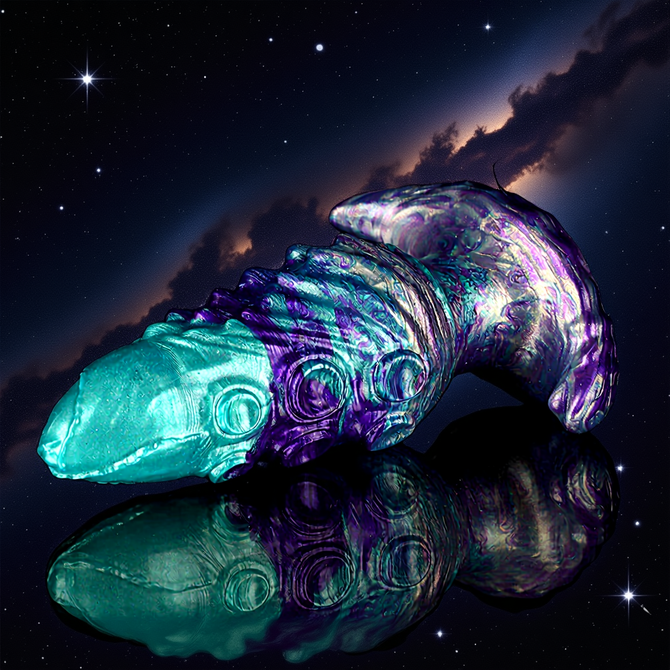
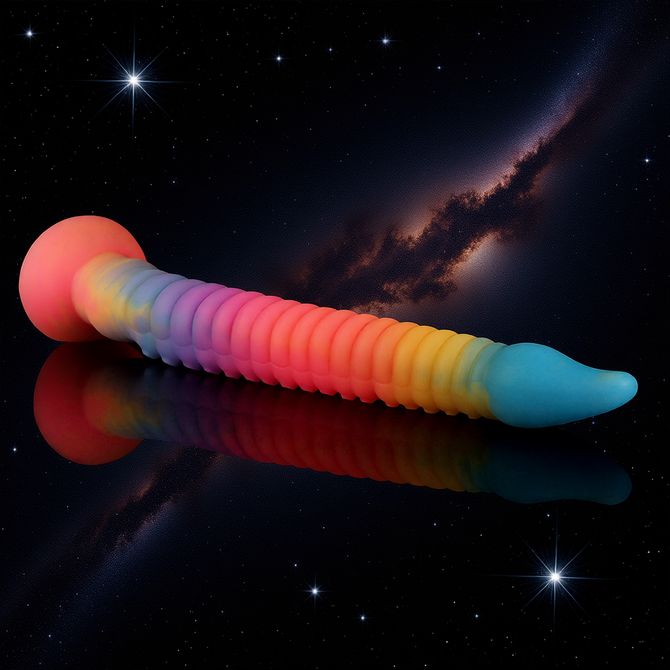
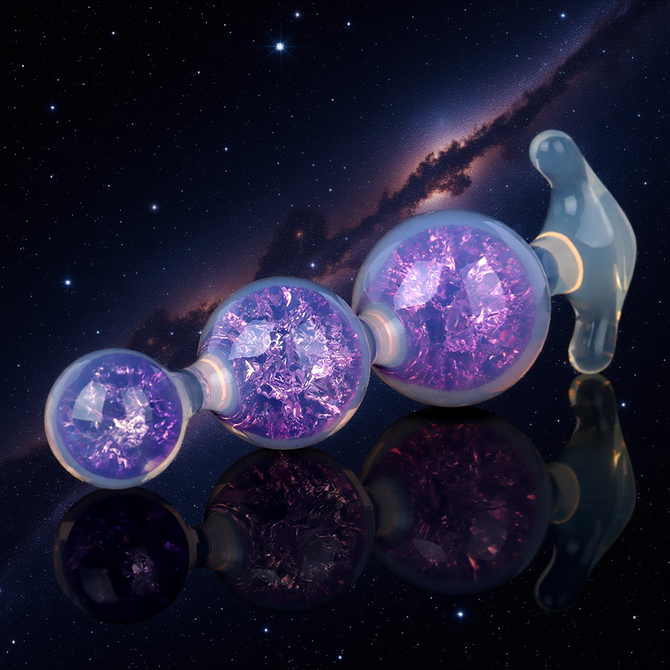
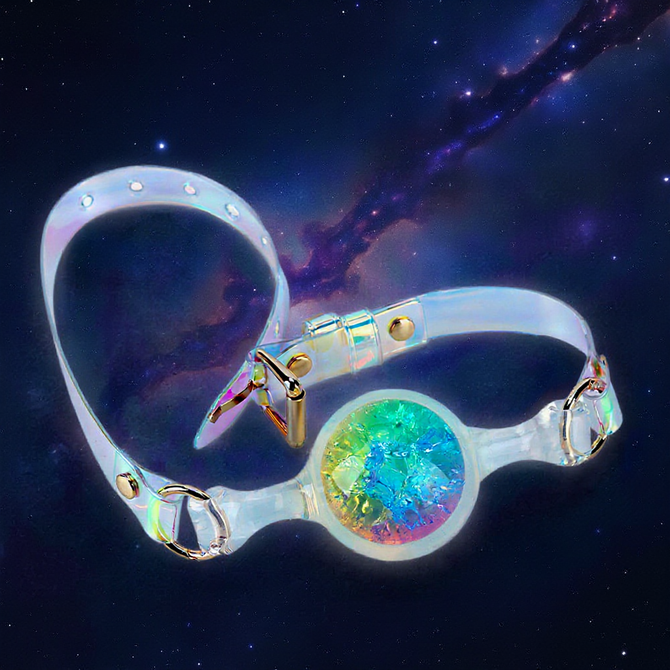

Anal beads and butt plugs are both designed for anal use, but they are built around different experiences. Anal beads use a connected series of rounded sections, so gradual movement is central to the design. A butt plug uses one tapered body with a narrower neck and a wide base, so it is designed to remain in place and provide steadier pressure.
Neither category is automatically “better” or universally more beginner-friendly. The safer choice starts with the exact product’s intended use, dimensions, flexibility, material, base or retrieval handle, lubricant guidance, and care instructions—not its category name alone.
Anal beads vs. butt plugs at a glance
| Comparison point | Anal beads | Butt plugs |
|---|---|---|
| Basic design | A connected series of rounded or graduated sections, often on a flexible shaft | One tapered body, usually with a narrower neck and a flared base |
| Primary difference | Movement across each section is part of the experience | Designed to stay in place for steadier pressure |
| Sizing control | Graduated designs may let you stop before the largest section | The widest insertable diameter is encountered as one continuous shape |
| What to inspect | Maximum bead diameter, spacing, shaft flexibility, total and insertable length, secure handle or base | Maximum diameter, taper, neck width, insertable length, base width and shape |
| Care details | Check the spaces between sections, seams, controls, and charging points | Check texture, seams, controls, and charging points |

Start with the non-negotiable safety filter
Any product intended for anal insertion needs a secure feature that remains outside the body, such as a sufficiently wide flared base, hooked base, or purpose-built retrieval handle. A medically reviewed guide to anal-toy designs describes this requirement for both plugs and beads.
Product construction and user information also matter. ISO 3533:2021 is an international standard covering material, design, and user-information safety requirements for manufactured sex toys. Its existence does not prove that any individual product complies with it. Treat a compliance claim as verified only when the manufacturer identifies the standard and provides appropriate evidence.
Use only a product explicitly intended for the planned use. Stop if you feel pain or unexpected discomfort, and do not use numbness as a way to continue. If a product becomes stuck or you have severe or persistent symptoms, seek medical care rather than attempting a risky workaround.
Choose anal beads when movement is the main preference
Anal beads make the transition from one rounded section to the next a defining part of the design. A graduated set can also provide clearer stopping points: you do not have to reach the largest section for the product to be usable, provided the manufacturer’s instructions support partial insertion and the external handle remains secure.
Before choosing beads, compare:
- Maximum diameter: the largest section matters more than a label such as small or beginner.
- Spacing and progression: closely spaced, evenly changing sections differ from large jumps in size.
- Flexibility: a flexible shaft moves differently from a firmer one; neither is universally preferable.
- External control: confirm that the handle or base is designed to remain outside and is easy to hold.
- Seams and electronics: more contours, motors, buttons, or charging points can change cleaning instructions.
Use OMIREA’s Ripple anal-beads collection to compare current designs, but make the final decision from the exact product page and instructions.
Choose a butt plug when steady pressure is the main preference
A butt plug is designed around one continuous tapered shape that narrows into a neck and ends in a wide base. Once positioned according to its instructions, it is intended to stay in place rather than create repeated transitions between separate sections.
Before choosing a plug, compare:
- Maximum diameter: check the widest insertable point, not only total height or circumference.
- Taper: a gradual taper and a sudden change in width are not the same experience.
- Neck and base: the neck affects how the product rests, while the base must stay securely outside.
- Base shape: round, T-shaped, and other bases can sit differently; choose for the intended position and follow the product instructions.
- Optional features: vibration, remote control, lighting, or weight may change operation and care, but they do not define what makes the product a plug.
OMIREA’s Abyss anal-plug collection provides current examples. Check each listing rather than assuming every product in the collection has the same dimensions, material, water rating, controls, or intended use.
Which is the better first choice?
There is no universal winner. Use the decision that matches the uncertainty you actually have:
- If you want distinct, gradual stages and movement, compare smaller graduated beads.
- If you want one continuous shape and steadier pressure, compare a smaller plug with a gradual taper.
- If movement makes you uncertain, a simple plug may be easier to evaluate.
- If committing to one maximum diameter makes you uncertain, a graduated bead design may offer more stopping points.
- If you are unsure about either category, review OMIREA’s first anal exploration guide before buying and choose the smaller, simpler design whose instructions you fully understand.
“Beginner-friendly” should never replace measurements. Compare maximum diameter, insertable length, flexibility, and base design, and remember that your comfort matters more than a marketing label.
Material, lubricant, and barrier compatibility
Identify the exact material from the product page or packaging before choosing lubricant. OMIREA’s sex-toy lubricant compatibility guide recommends following the individual product instructions and uses water-based lubricant as the conservative default for OMIREA silicone-surface products unless the product page says otherwise.
If you use a latex condom as a barrier, the CDC’s condom guidance recommends water-based lubricant and warns that oil-based products can weaken latex. Other barrier materials can have different compatibility rules, so check the exact barrier label too.
Cleaning and sharing
Follow the exact product’s cleaning method, especially when it contains a motor, charging contact, seam, coating, or multiple materials. OMIREA’s cleaning and maintenance guide covers its general wash, dry, inspect, and storage workflow.
For shared toys, the CDC advises not sharing when possible. If a toy is shared, the CDC advises using a new condom where possible and washing the toy carefully after each use. Change the barrier between partners or body areas, and do not assume that wiping a product is equivalent to the manufacturer’s full cleaning method.
A one-minute product-page checklist
- Confirm the product is specifically intended for anal use.
- Find the maximum diameter, insertable length, and total length; do not substitute one for another.
- Check the base or retrieval handle and confirm it remains securely outside.
- Identify the exact material, flexibility, seams, coatings, and electronic components.
- Read the manufacturer’s lubricant, cleaning, drying, storage, charging, and water-exposure instructions.
- Ignore price, vibration count, or decorative features until the safety and fit information is clear.
- Do not rely on “beginner,” “body-safe,” “medical-grade,” or “waterproof” without the underlying specifications or evidence.
Frequently asked questions
Are anal beads the same as a butt plug?
No. Beads use a connected series of sections and make movement between them central to the design. A plug uses one tapered body and is designed to stay in place.
Are anal beads always easier for beginners?
No. Graduated beads may offer stopping points, but flexibility, spacing, maximum diameter, and handle design still matter. A small, gradually tapered plug may be simpler for someone who prefers less movement.
Does vibration change the category?
No. A plug or a bead design can include vibration. Shape and intended use define the category; vibration is an optional feature that adds operating, charging, noise, and cleaning considerations.
Which category is easier to clean?
A simple one-piece shape may have fewer contours, but actual care depends on seams, materials, texture, controls, and water resistance. Follow the exact product instructions rather than the category label.
The practical takeaway
Choose beads for a design centered on gradual sections and movement. Choose a plug for one continuous tapered shape and steadier pressure. In both cases, let intended use, measurements, flexibility, a secure external base or handle, material, lubricant compatibility, and care instructions make the final decision.
When you are ready to compare current options, browse OMIREA’s Ripple collection and Abyss collection, then verify every specification on the exact product page before purchase or use.

