





Short answer: water-based lubricant is the broadest-compatibility starting point when you want one option that works across common sex-toy materials. Silicone-based lube can last longer, but it may not be compatible with a silicone-surface toy. Oil-based lube needs the most caution because it can weaken latex condoms and may not suit some soft toy materials.
The reliable way to choose is to check everything the lubricant will touch: the toy material, any condom or barrier, and your body. Then read the instructions for all three products. A generic chart is a starting point, not permission to override a label or care guide.
Choose lube by everything it will touch
Sexual Health Oxfordshire's lubricant guidance identifies water-based lube as compatible with all sex toys and cautions that silicone-based and some oil-based formulas should not be used with silicone or realistic-feel toys. That makes water-based lube the conservative default whenever the exact combination is uncertain.
| What the lube will touch | Conservative starting point | Main check |
|---|---|---|
| Silicone-surface toy | Water-based lube | Avoid silicone-based and some oil-based formulas unless the toy and lube makers both confirm compatibility. |
| Glass or stainless-steel toy | Water-based lube is the simplest default | A silicone-based formula may be an option when both labels allow it, but any condom or barrier still controls the final choice. |
| Latex external condom | Water- or silicone-based lube | Do not use oil-based lube with latex. |
| Anal toy used with a latex condom | A thicker water-based gel is the broadest default | Confirm both toy and condom compatibility, use enough lubricant, and add more when friction increases. |
| Unknown toy material | Pause before use | Find the product page, packaging, or manufacturer instructions instead of guessing from appearance or texture. |

Water-based lube: the broad-compatibility default
Water-based lube is the easiest place to begin because it is compatible with common toy materials and latex condoms. It is especially useful when one session involves more than one material, or when you want a simple rule that does not depend on remembering a long compatibility matrix.
Formula still matters. Read the bottle for intended use, ingredients, expiry information, and barrier compatibility. If the label does not clearly cover your planned use, choose a product that does rather than improvising with a household lotion or oil.
Silicone-based lube: longer-lasting, but check the toy
Silicone-based formulas are often chosen when a longer-lasting glide is useful. The tradeoff is toy compatibility: a silicone-based lubricant may affect a silicone or realistic-feel surface. Do not assume that a premium toy and a premium lube are automatically compatible simply because both use the word “silicone.”
When the toy is not silicone, silicone-based lube may be an option—but the exact toy instructions and any barrier label still decide. The World Health Organization's condom guidance recommends water- or silicone-based lube with condoms and warns that products such as kitchen oil, butter, and hand lotion can contribute to breakage.
Oil-based lube: check the barrier first
The clearest warning is about latex: oil-based lubricant can weaken a latex external condom. The CDC's external-condom guidance recommends water- or silicone-based lubricant and advises against oil-based lubricant because it can weaken the condom.
Barrier rules are material-specific. The CDC notes that internal-condom guidance differs, which is a useful reminder not to apply a latex rule to every barrier. Read the actual package for the condom, barrier, toy, and lubricant you will use together.
Oil can also be a poor match for some silicone or realistic-feel toys. If a formula is intended only for external massage, do not treat it as an all-purpose personal lubricant. “Natural,” “plant-based,” or “skin care” language does not prove compatibility with a toy or barrier.
Anal toys need a compatibility check and enough glide
The World Health Organization notes that the rectum does not provide natural lubrication, so suitable lube is particularly important during anal sex. For a silicone anal toy or a toy used with a latex condom, a thicker water-based gel is the broadest conservative choice. If you prefer a silicone-based formula for longevity, use it only when the toy manufacturer confirms that the surface is compatible.
Apply lubricant before insertion and add more if friction returns. Slow down or stop when something feels painful; more intensity is never a reason to ignore discomfort. Use only toys intended for anal use, with a secure external stop or flared base, and follow the product's use and cleaning instructions.
A five-step check before every new pairing
- Identify the toy material. Use the product page, packaging, or manufacturer instructions. Do not identify material by touch alone.
- Identify every barrier material. Latex external condoms have different lubricant rules from some non-latex and internal barriers.
- Read both labels. The lubricant must allow the intended body use and the toy or barrier material.
- Start conservatively. When instructions allow the pairing, begin with a modest amount and add more whenever glide decreases.
- Clean and dry as directed. Follow the toy's own care guide after use, especially for powered products, seams, charging contacts, or detachable parts.
Match the guide to your OMIREA product
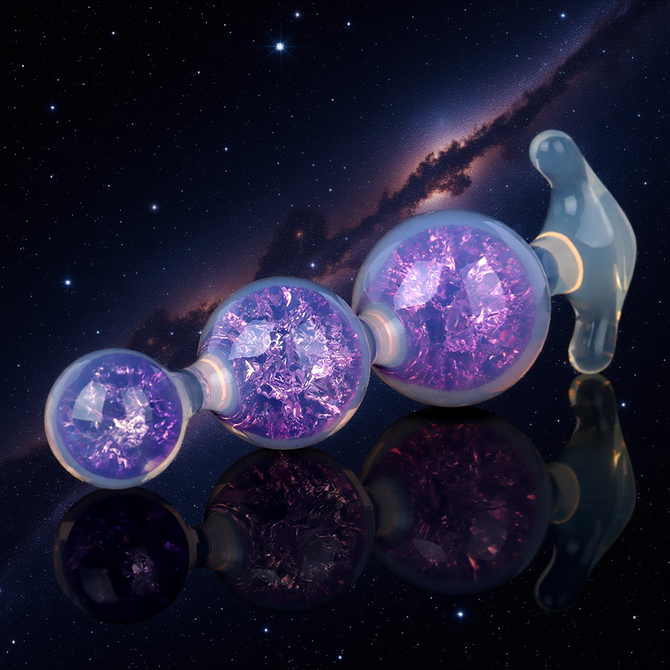
Start on the exact product page and look for its stated material and lubricant instructions. For category browsing, review the current OMIREA Primal dildo collection, OMIREA Abyss anal-plug collection, or OMIREA Ripple anal-beads collection. If the material or care directions are missing or unclear, pause and confirm them before choosing a lubricant.
You can also compare material terminology in OMIREA's silicone, TPE, and glass guide. Remember that material identification is only half the decision: any condom or other barrier needs its own compatibility check.
Frequently asked questions
Can I use silicone lube with a silicone toy?
Only when the toy maker and lubricant maker both say that exact pairing is compatible. If either set of instructions is silent, water-based lube is the more conservative choice.
Can I use oil-based lube with a latex condom?
No. Oil can weaken latex and make an external condom more likely to fail. Choose a water- or silicone-based lubricant that is labeled compatible with the condom you are using.
What is the best lube when I do not know the toy material?
Do not rely on color, softness, or price to identify the material. Find the original product information first. Water-based lube is broadly compatible, but an unknown toy material is also an unknown cleaning and care problem.
Do anal toys require a special lubricant?
They require enough suitable lubricant and a formula compatible with the toy and any barrier. A thicker water-based gel is a practical broad-compatibility starting point. A longer-lasting silicone formula may be an option only when the toy instructions allow it.
Ready to compare materials and care instructions? Browse OMIREA's current pleasure-product collection, confirm the exact product guidance, and choose your lubricant from there.


