





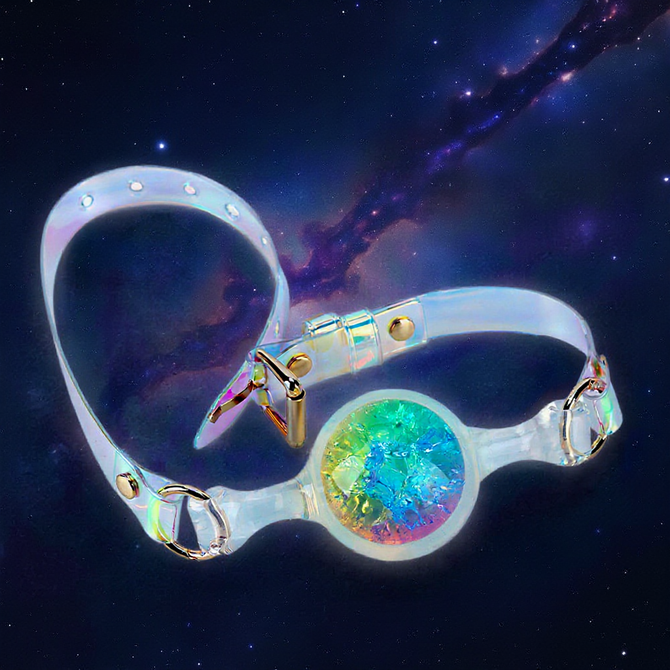

Choose a butt plug in this order: first confirm that it is designed for anal use and has a secure base that remains outside the body; then compare the fit measurements; next evaluate taper, neck, base shape, and material; and only then decide whether vibration, rotation, a remote, an app, lighting, or water resistance adds value. If a listing does not answer a fit or care question clearly, pause and ask rather than filling the gap with a guess.
This is a buying framework, not a universal size chart. Bodies, prior experience, intended position, and product construction differ. A label such as small, beginner-friendly, or premium cannot replace dimensions and instructions.
Start with two entry requirements
Before comparing color, price, intensity, or connected features, check two basics:
- Intended use: the manufacturer should identify the product as an anal toy or butt plug and provide use and care information.
- External stop: the design needs a wide, secure base or equivalent stopping feature that is intended to remain outside the body.
The ISO 3533:2021 standard overview confirms that material, design, and user information are all part of manufactured sex-toy safety requirements. The existence of the standard does not prove that a particular product complies with it; a seller or manufacturer would need to make and support that claim for the exact product.
The University of Rochester University Health Service also advises using a wide base for an anal toy, adequate lubricant, and proper cleaning. Treat those as entry requirements, not optional features.
If you are still deciding between product categories, first read OMIREA’s anal beads versus butt plugs comparison. Beads make movement between separate sections central to the experience; a plug uses one continuous body and is designed to rest in place according to its instructions.
Read size as four separate measurements
A single number rarely describes how a plug will fit. Look for these four measurements and make sure the listing names each one unambiguously.
| Measurement | What it should describe | Common mistake |
|---|---|---|
| Widest insertable diameter | The straight-line width across the widest part intended to enter the body | Using the base width, package width, or an unexplained “girth” value |
| Insertable length | The length from the tip to the point where the external base begins | Treating total height, including the base, as insertable length |
| Neck width | The narrower section between the body and base | Assuming two plugs with the same maximum diameter will rest the same way |
| Base dimensions | The width, length, thickness, and shape of the part that remains outside | Accepting “flared,” “round,” or “diamond” without checking actual dimensions and intended position |
Diameter and circumference are not the same. For a genuinely round cross-section, circumference is approximately diameter multiplied by 3.14. Do not make that conversion when the product is oval, irregular, compressible, or when the listing does not say what its number measures. Ask for the original diameter and circumference instead.
Total length is not a substitute for insertable length. A taller plug can have a large external base or a long neck, while a shorter plug can place more of its length in the insertable body. Compare the part that is intended to enter, not the end-to-end silhouette.

Shape changes how the measurements work together
Taper
A taper shows how quickly the body changes from a narrower tip to its widest point. Two products can share a maximum diameter but reach it at very different rates. Compare the outline and measurements together; do not assume that the word tapered describes how gradual the change is.
Body and texture
A smooth teardrop, curved body, spiral, ridge, or moving section changes more than appearance. Texture and powered motion can affect cleaning, operating instructions, and how easy it is to interpret the underlying size. If this is your first comparison, a clearly specified design is more useful than a long feature list whose geometry remains unclear.
Neck
The neck sits behind the widest part of a conventional plug. Its width, length, flexibility, and transition into the base influence how the product is intended to rest. A listing that gives only maximum diameter leaves this part of the fit unanswered.
Base
The base has two jobs: it provides an external stop and it gives the user control during placement and removal. Its shape also needs to suit the intended position. A round disc, elongated base, ring, or another design may sit differently, but the label alone cannot establish whether it is appropriately sized or comfortable for a specific use. Check the dimensions, the manufacturer’s intended use, and the product instructions.
Material affects flexibility, feedback, and care
Ask for the exact material of every contact surface and note whether the product combines a soft exterior with a motor, rigid core, charging contact, coating, decorative part, or adhesive. A product described simply as “silicone” can still contain several components that affect flexibility and care.
- Flexible materials can compress or bend, so catalog dimensions alone do not describe every aspect of the feel.
- Rigid materials do not compress in the same way, making accurate dimensions and an intact, smooth surface especially important.
- Mixed or powered designs require instructions for the complete product, not only the outer material.
There is no universally “best” material. Use the exact material identity, construction, care instructions, and your known preferences. Current medically reviewed guidance from Healthline’s butt-plug overview likewise treats intended design, size, a wide base, surface material, and clear cleaning instructions as separate selection considerations rather than one quality label.
Once the material is known, use OMIREA’s sex-toy lubricant compatibility guide to check the toy, lubricant, and any barrier as one system. After use, follow the exact product instructions and OMIREA’s cleaning and maintenance guide. Do not infer that a powered product can be submerged merely because its main surface is washable.

Evaluate powered features only after fit
Vibration, rotation, lights, a remote, or an app can change operation, but none answers the fit questions above. Use a second checklist for powered products:
- Controls: Can the product be operated directly, or does it depend on a remote or app? Is there a clear way to stop it immediately?
- Power: What charger, connector, charging state, and indicator does the exact model require?
- Remote: Is a battery included? Is there an insulation tab? What pairing and range instructions does the manufacturer provide?
- App: Which phone systems are supported, what permissions are requested, and can core functions work without an account or connection?
- Water exposure: Is there a specific rating and a matching care instruction? “Washable,” “water-resistant,” “IPX6,” and “IPX7” are not interchangeable labels.
- Cleaning: Do seams, moving parts, buttons, lights, or charging contacts require a different method from a one-piece non-powered product?
More modes do not automatically mean a better match. A simpler product with complete dimensions and clear instructions can be easier to evaluate than a feature-rich product with missing fit information.
Use this three-pass buying decision
Pass 1: Design gate
- The product is explicitly intended for anal use.
- A secure external base or stopping feature is visible, described, and dimensioned.
- The material and manufacturer instructions are available.
If any item fails, stop the comparison. Price and extra features do not repair a missing entry requirement.
Pass 2: Fit comparison
- Record widest insertable diameter.
- Record insertable length.
- Record neck width and length.
- Record base width, length, thickness, and shape.
- Note taper, texture, curve, flexibility, and weight only when the listing defines them clearly.
Compare products using the same units and the same kind of measurement. Never rank a stated diameter against another listing’s unexplained “girth.”
Pass 3: Operation and care
- Choose only the controls and motion you actually want.
- Confirm lubricant and barrier compatibility.
- Confirm cleaning, drying, charging, storage, and water-exposure instructions.
- Save the exact product page or manual so the guidance remains tied to the model.
Apply the checklist to OMIREA’s Abyss collection
The current OMIREA Abyss anal-plug collection presents four designs with different shapes, controls, movement, lighting, and water language. Open the exact product listing rather than transferring one model’s feature or instruction to another.
Before choosing, copy the following into your notes:
- Exact model name:
- Widest insertable diameter:
- Insertable length:
- Neck width and length:
- Base dimensions and shape:
- Contact material and construction:
- Direct, remote, or app controls:
- Charging and water instructions:
- Lubricant and cleaning instructions:
Leave a field blank when the source is blank. If a term is ambiguous, ask OMIREA to confirm what was measured and in which units. A blank field is a useful buying signal; an invented number is not.
Frequently asked questions
What butt plug size should a beginner choose?
There is no single number that works for every person. Current medically reviewed guidance generally points new users toward a smaller design, but size is only one part of the decision. Confirm anal-intended use, a secure external base, complete measurements, material, and care instructions before considering a label such as beginner.
Is total height the same as insertable length?
No. Total height can include the base and any external controls. Insertable length describes only the portion intended to enter the body. Ask for both if the product page does not distinguish them.
Which matters more: diameter or circumference?
Either can describe the widest part when it is labeled clearly, but they are different measurements. Diameter goes across; circumference goes around. Compare like with like and avoid converting an irregular or unexplained value.
Is “beginner-friendly” a specification?
No. It is a positioning label. It does not tell you the widest diameter, insertable length, taper, neck, base dimensions, flexibility, or instructions.
Does a suction base automatically make a toy suitable for anal use?
No. A suction feature describes one possible mounting method. Confirm that the exact product is intended for anal use and that its external base, dimensions, and instructions support the planned use.
What should I do when a product page is missing a measurement?
Pause the comparison and ask the seller or manufacturer for the exact measurement, what part it describes, and the unit used. Do not infer it from a photograph, another model, or a label such as small or large.
The practical takeaway
A good comparison is not “small versus powerful” or “basic versus premium.” It is a documented sequence: anal-intended design, secure external base, four fit measurements, shape, material, controls, and care. When the information is complete, compare the current Abyss collection using the worksheet above. When it is incomplete, the right next step is a question—not a guess.


