



Use anal beads only when the product is specifically designed for anal use and has a secure retrieval handle or base that stays outside the body. Read the exact model instructions, inspect the full strand, apply compatible lubricant, move one bead at a time, and stop at the first point that feels right. You never need to insert every bead. Keep the retrieval end visible, reachable, and under your control from start to finish.
This is a general safer-use framework for consenting adults, not a substitute for the instructions supplied with your product or for medical advice. Anal-bead designs vary in bead size, spacing, flexibility, total and insertable length, controls, water resistance, and care requirements.
Start with a retrieval-first product check
Before lubricant or body contact, check the complete product on a well-lit surface. If you cannot confirm what the item is, what it is designed for, or how it should be cleaned, pause until you can find reliable instructions.
- Intended use: the maker should explicitly identify the product for anal use.
- External control: the loop, handle, or base must be designed to remain outside and easy to hold. Do not treat the last bead as a retrieval feature.
- Condition: do not use a strand with a tear, crack, rough seam, loose connection, exposed part, unusual tackiness, or damaged control.
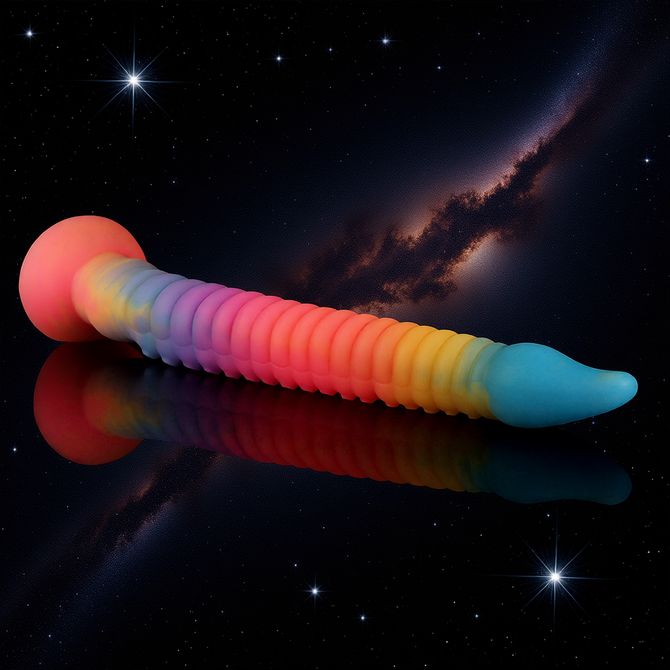
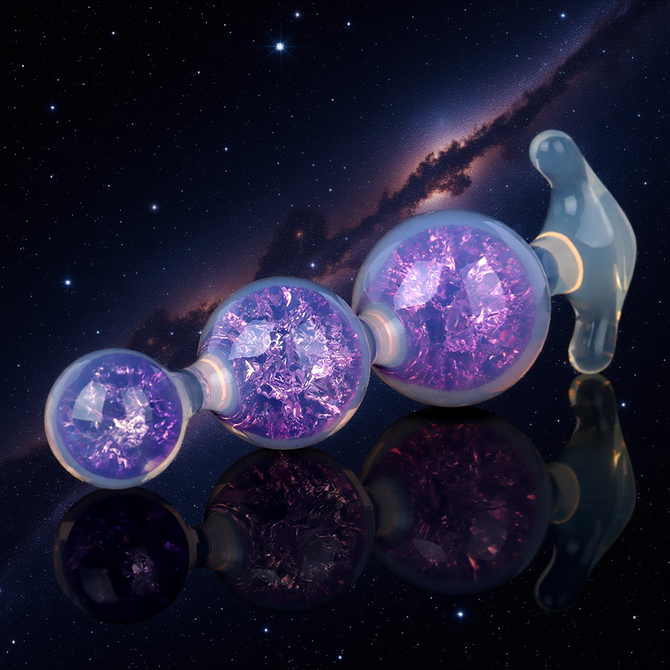
- Progression: compare the smallest and largest beads, the size changes between them, spacing, flexibility, and the length you can comfortably control.
- Electronics: for a vibrating model, understand the buttons, charging state, shutoff, and water-care limits before use.
OMIREA's anal beads vs. butt plugs comparison explains the category difference and the measurements worth checking. A category name or a label such as beginner-friendly cannot replace the exact dimensions and instructions.

Choose lubricant by the whole setup
The anus does not create its own lubricant. Cleveland Clinic's clinical guidance on anal lubrication and pain recommends adequate lubricant and stopping when discomfort increases or persists.
Water-based lubricant is the broadest conservative starting point for common toy and condom materials, but the labels still decide. Check the bead material, any condom or barrier, the lubricant, and your own sensitivities. OMIREA's lubricant compatibility guide walks through that four-part check.
Keep lubricant within reach so you can add more without rushing. For routine hygiene, gentle external washing is enough; Healthdirect's anal-care guidance advises against douching because it can damage the rectum.
How to use anal beads step by step
- Read the exact instructions. Confirm the intended use, maximum insertable portion, lubricant limits, controls, cleaning method, and any model-specific contraindications.
- Agree on control. If a partner is involved, decide who holds the retrieval end, how the receiving person will ask to pause or stop, and that either person can end the activity immediately.
- Wash hands and prepare the product. Follow the maker's before-use cleaning directions. Put a clean towel, compatible lubricant, and any barrier you plan to use within reach.
- Lubricate the contact area and the first bead. Add more as needed. Friction, dryness, or a dragging sensation is a reason to pause rather than push.
- Move one bead at a time. Begin with the smallest bead. Use gentle, controlled pressure, pause after each section, and continue only if you actively want to. Do not force a bead past resistance.
- Keep the retrieval end outside. It should remain visible or immediately reachable. Stop if the handle shifts toward the body, becomes hard to hold, or no longer gives you confident control.
- Remove slowly and deliberately. Support the strand near the external end, move one section at a time, and pause if you meet pain or unexpected resistance. Do not yank, snap, or hand control to someone who cannot respond to your stop signal.
There is no prize for reaching the largest bead. A graduated strand offers stopping points, not a target. The right endpoint for a session may be the first bead, several beads, or choosing not to continue.
If a partner is involved, keep the receiver in control
Consent applies to every stage: starting, adding another bead, changing vibration, movement, and removal. Agree on plain language or an unmistakable signal before beginning. Check in after each change instead of treating silence as permission.
- The receiving person sets the pace and can reverse a decision at any time.
- The partner handling the strand keeps movements slow, predictable, and easy to stop.
- No one pulls the strand as a surprise or uses removal as a countdown the receiver cannot interrupt.
- If communication becomes unclear, stop movement and remove only under the receiving person's direction unless urgent medical help is needed.
Stop conditions and the medical boundary
Stop for sharp, increasing, or persistent pain; bleeding; loss of control of the retrieval end; a damaged strand; or any feeling that the plan is no longer comfortable or consensual. More force is not a solution to resistance or pain.
If the product becomes stuck or the retrieval end is no longer reachable, do not use tools, add another object, or keep making forceful attempts. Healthdirect's anal-injury guidance advises going to an emergency department for an object stuck in the rectum so it can be removed by a medically trained professional. Heavy bleeding, faintness, inability to move, or severe symptoms require urgent local emergency help.
Clean, dry, inspect, and store
After removal, follow the exact product instructions. A simple, non-motorized one-piece design may have different care requirements from a vibrating strand with controls, a charging contact, seams, or mixed materials.
- Wash the product using only the method approved by its maker.
- Pay attention to the spaces between beads, the connecting stem, handle, seams, buttons, and charging area.
- Rinse only as permitted and dry the entire product completely.
- Inspect again for tears, cracks, looseness, rough edges, or a changed surface.
- Store it clean, dry, protected from dust and sharp objects, and separate from other materials when the care instructions require it.
Use OMIREA's cleaning and maintenance guide as a general checklist, then let the model's current care instructions control water exposure, cleaning products, charging, and storage.

Sharing needs a new barrier and a full reset
The simplest option is not to share. If a toy is shared, the CDC's HIV risk-reduction guidance advises covering it with a new condom when possible and washing it carefully after each use. Change the barrier and clean the product before it touches another person or body area. A condom does not replace cleaning and may not work reliably on every shape.
OMIREA's safer-sharing guide provides the full barrier, handoff, cleaning, and storage routine.
Frequently asked questions
Do I need to insert every bead?
No. Insert only as many as you actively want and can control comfortably. A graduated design provides choices; it does not create a goal.
How long can anal beads stay in?
There is no universal duration that applies to every design or person. Follow the exact product instructions and do not invent an extended-wear limit when the maker has not provided one. Stop immediately for discomfort, pain, bleeding, loss of retrieval control, or any reason you no longer want to continue.
Are anal beads always easier for beginners than a butt plug?
No. Bead size, progression, flexibility, spacing, length, handle, and controls all affect the experience. A smaller, simpler design in another category may be easier for someone who prefers less movement. Compare specifications rather than relying on a beginner label.
What if removal feels difficult?
Stop pulling, keep the handle controlled, breathe, and reassess lubricant and position without forcing the product. If the item is stuck, the handle is unreachable, or pain or bleeding occurs, use the medical boundary above.
The practical takeaway
A calm anal-bead routine is retrieval-first: verify the external handle, understand the progression, use compatible lubricant, move one bead at a time, keep control visible, stop early when needed, remove slowly, and complete the care routine. When you are ready to compare current options, browse OMIREA's Ripple anal-beads collection and confirm every measurement, control, lubricant rule, and care instruction on the exact product page before purchase or use.


